You are here:
19
20
21
产品高清图
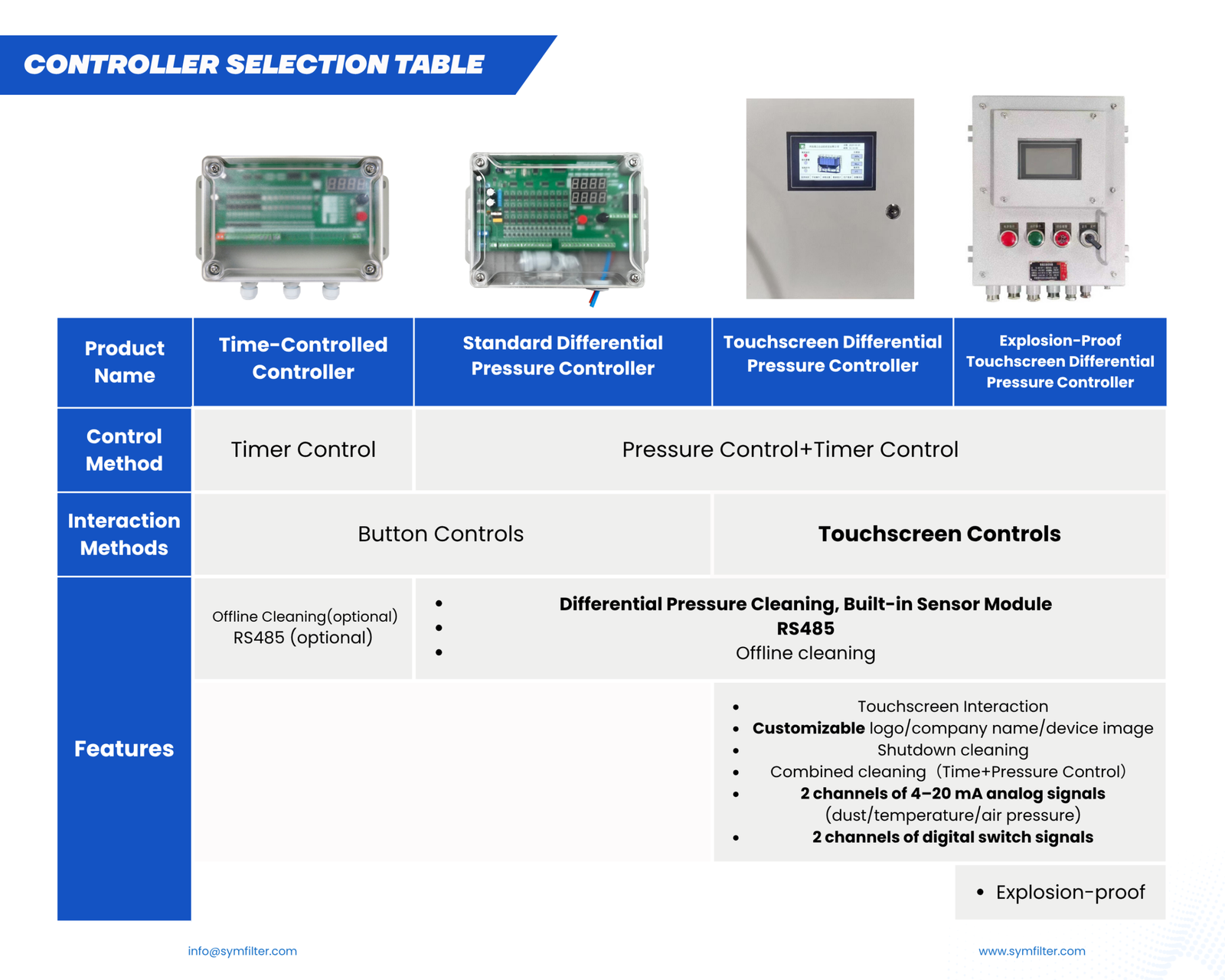
控制仪选型表
19
20
21
产品高清图
控制仪选型表

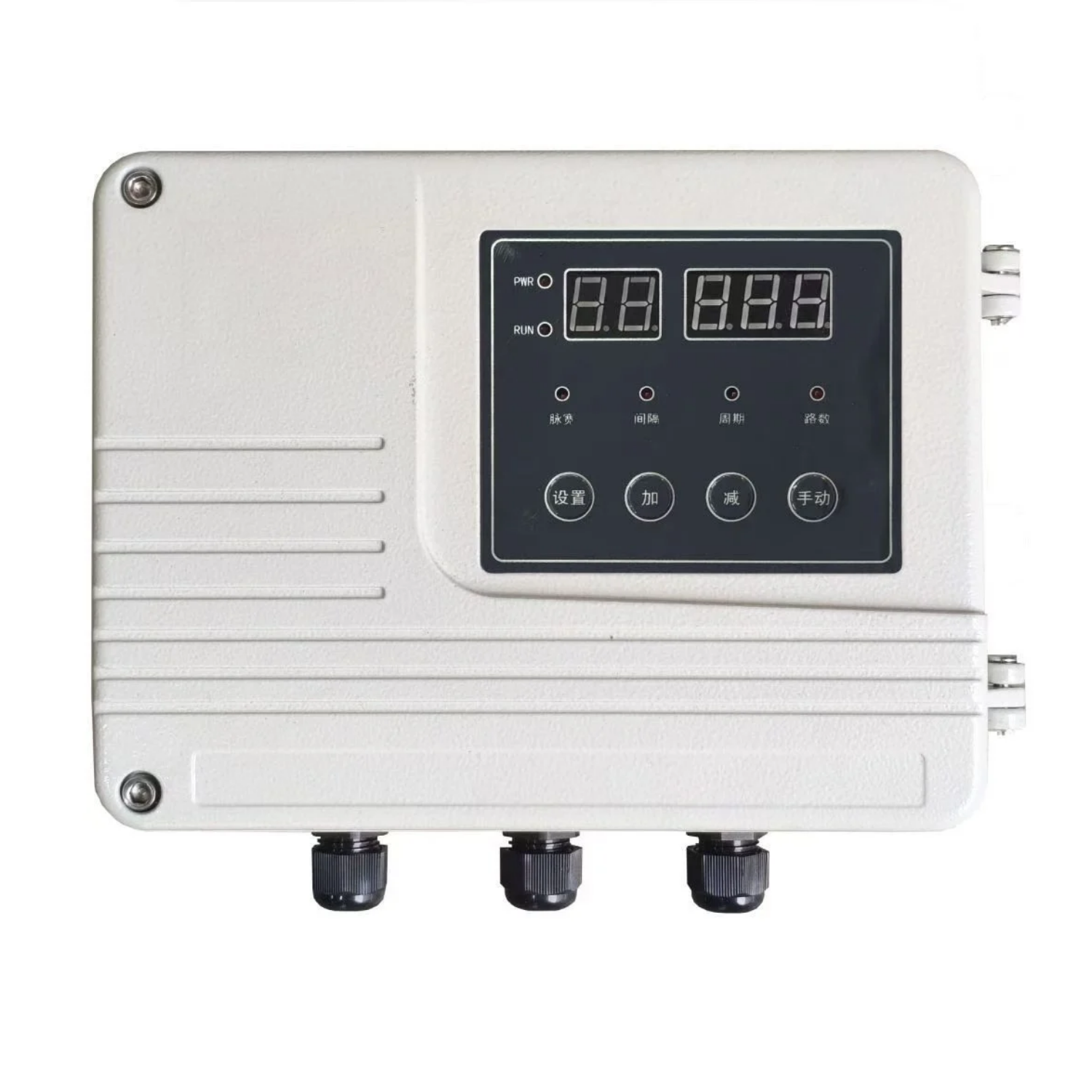
Dust Collector Smart Components, Pulse Controllers

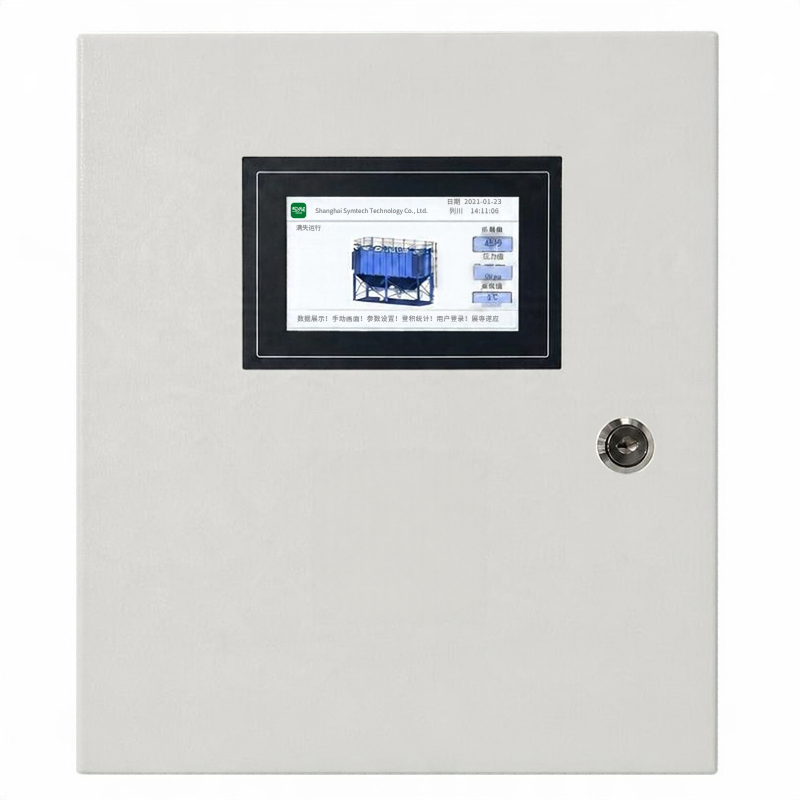
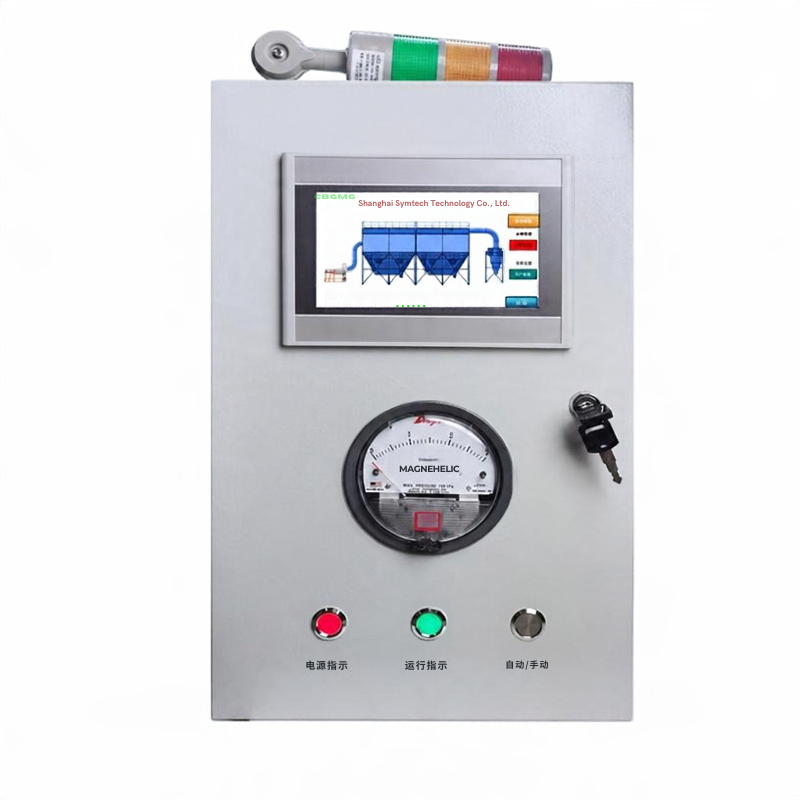
Touchscreen(PLC) Differential Pressure Controller

Touchscreen Differential Pressure Controller is an intelligent control device designed for smart filter cleaning and operating condition monitoring in industrial dust collection systems. It provides centralized touchscreen display and parameter setting for differential pressure, pulse duration, cleaning intervals, and other operating parameters, while automatically controlling pulse cleaning based on the differential pressure across filter cartridges or bags.

The controller supports both differential pressure control and timer-based cleaning, and integrates functions including downtime cleaning, RS485 communication, multiple analog inputs, and digital inputs. Its functions can be configured according to the control requirements of different dust collection systems, providing a more intuitive, flexible, and intelligent control solution for dust collector operation.

Input Voltage

110 Vac, 50–60 Hz, ±10%

220 Vac, 50–60 Hz, ±10%

24 Vdc, ±10%

output Voltage

110 Vac, 50–60 Hz

220 Vac, 50–60 Hz

24 Vdc

Solenoid valve output channels 1–96 (customizable);

additional channels can be

added via a controller

Display

touchscreen

Valve opening pulse time

0.01 s to 99.99 s Pause interval between valve openings 1 s to 9999 s
Differential Pressure Range 0-10 kpa Enclosure

metal

1、 Features & Functions

Touchscreen Operation

The controller uses a touchscreen interface for parameter setting and operating status monitoring. It provides an intuitive display of differential pressure, cleaning status, and other operating information, making system operation and parameter adjustment easier and more convenient.

Intelligent Differential Pressure Cleaning

The controller automatically starts pulse cleaning when the preset differential pressure is reached. After the fan stops, it can also perform an additional cleaning cycle to help reduce dust accumulation on filter cartridges or filter bags.

Differential Pressure Alarm

Supports high and low differential pressure alarms to help operators identify abnormal operating conditions in a timely manner.

Multi-Parameter Monitoring

Supports 4–20 mA analog inputs and external sensors for monitoring compressed air pressure, dust concentration, temperature, airflow, ash discharge valve status, equipment operating/stop status, and material level.

Integrated System Control

Provides centralized control of pneumatic hammers, pneumatic cylinders, pulse solenoid valves, and other actuators, allowing multiple components of the dust collection system to operate together according to the configured control logic.

RS485 Remote Communication

The controller can be connected to a central control system through RS485 communication, enabling data sharing, remote parameter reading, and adjustment of key operating parameters.

Customizable Interface Design

The interface can be customized with the customer’s company logo, company name, and equipment image, allowing the control interface to better match the branding and equipment requirements of dust collector manufacturers.

Combined Differential Pressure and Timer-Based Control

Supports both differential pressure control and timer-based cleaning. Users can select the appropriate cleaning mode according to different dust conditions and operating requirements, while combined control can provide greater flexibility for changing operating conditions. Advanced dust collector controllers in the industry also commonly offer differential pressure, timer-based, downtime, and combined cleaning modes.


Optional Function

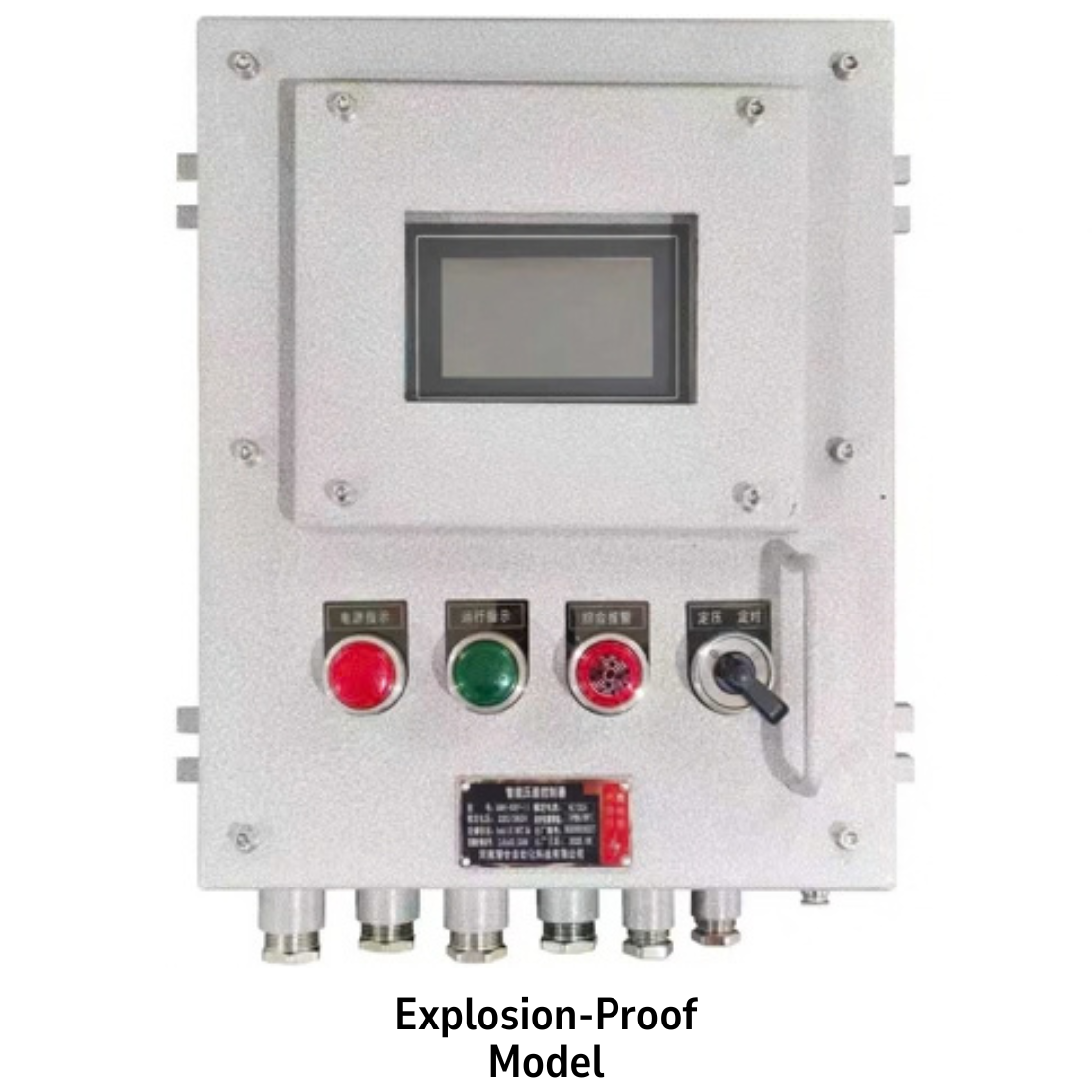
Explosion-Proof Version

An explosion-proof version can be configured for applications requiring explosion-protection measures.

The explosion-proof model has the same features as the standard model, except for the addition of explosion-proof capabilities.


Typical Applications

The Touchscreen Differential Pressure Controller is suitable for industrial dust collection equipment using compressed-air pulse cleaning, including:

  • Cartridge Dust Collectors
  • Baghouse Dust Collectors
  • Powder Coating Systems
  • Powder Recovery Systems
  • Sandblasting and Abrasive Blasting Equipment
  • Woodworking Dust Collection Systems
  • Cement and Building Materials Industries
  • Chemical and Powder Processing Equipment
  • General Industrial Dust Collection Systems

Input Voltage

110 Vac, 50–60 Hz, ±10%

220 Vac, 50–60 Hz, ±10%

24 Vdc, ±10%

output Voltage 110 Vac, 50–60 Hz

220 Vac, 50–60 Hz

24 Vdc

Solenoid valve output channels 1–96 (customizable);

additional channels can be

added via a controller

Display

touchscreen

Valve opening pulse time

0.01 s to 99.99 s Pause interval between valve openings 1 s to 9999 s
Differential Pressure Range 0-10 kpa Enclosure

metal

1、Why Is This PLC Touchscreen Differential Pressure Controller the Intelligent Control Center of a Dust Collector?

Traditional pulse controllers mainly control pulse solenoid valves. In contrast, this PLC Touchscreen Differential Pressure Controller can simultaneously control pulse solenoid valves, pneumatic hammers, pneumatic cylinders, and multiple other actuators, creating a centralized control center for the dust collection system.

The controller can also receive various operating signals through analog and digital inputs, bringing differential pressure, dust concentration, temperature, airflow, hopper level, ash discharge valve status, and equipment running/stop status into one control system for centralized monitoring, logic processing, and management.

In this way, the controller is no longer simply a “pulse valve controller,” but becomes a central node connecting sensors, control signals, and actuators. It enables centralized monitoring, logic control, and coordinated operation of dust collection equipment, while also connecting to higher-level control systems through RS485 communication.

2、Does the Controller Support Downtime Cleaning and Combined Cleaning?

Yes. The controller supports both Downtime Cleaning and Combined Cleaning, and additional functions can be customized according to the requirements of different dust collection systems.

Downtime Cleaning means that after the dust collector fan stops, the controller continues the pulse cleaning process for a preset period according to the programmed sequence.
For applications with high dust loading or regular shutdown and maintenance cycles, downtime cleaning can supplement normal operating cleaning by removing residual dust from the filter media after production ends or the equipment stops. This helps keep the filters in a better condition before the next startup. The downtime cleaning cycle can be configured according to the production cycle and equipment operating logic.

Combined Cleaning combines differential pressure cleaning and timer-based cleaning. During normal operation, the controller continuously monitors filter differential pressure and starts pulse cleaning when the preset pressure level is reached. At the same time, the system can execute pulse cleaning according to preset time parameters, providing greater flexibility for different operating conditions.
This type of combined control is also used in industrial dust collection controllers to combine cleaning during operation with additional cleaning after shutdown.

3、What Types of Sensors Does the Controller Support?

The controller supports multiple sensors with 4–20 mA analog signal outputs. Depending on the system configuration, sensors can be used to monitor parameters such as differential pressure, compressed air pressure, dust concentration, temperature, airflow, and other operating conditions.

4、How Many Pulse Solenoid Valves Can the Controller Control?

There is no single fixed number of pulse solenoid valves. The capacity mainly depends on the controller model and the number of output channels.

We provide multiple configurations, including 4, 8, 12, 20, and 30 channels, with up to 96 output channels available for selected configurations. Each output channel can independently control one pulse solenoid valve, with configurations supporting two solenoid valves per channel where applicable.

The appropriate controller should be selected according to the overall dust collector configuration, including the number of filter cartridges or bags and the total number of pulse solenoid valves.

5、Can the Logo and Language Be Customized?

Yes. The company logo, company name, and equipment image displayed on the touchscreen interface can be customized to match the branding requirements of dust collector manufacturers and equipment integrators.

The interface can also support multiple languages, including Chinese, English, Spanish, and Portuguese.

6、Overview of the Main Features of This Pulse Controller?

Pulse Width: The duration of the driving voltage supplied to the solenoid pulse valve, i.e. how long the solenoid valve opens to blow compressed air. Too short → insufficient cleaning force; too long → waste of compressed air and accelerated diaphragm wear. Normally set at tens of milliseconds.

Pulse Interval: The time interval between successive firing of two adjacent pulse valves. It prevents simultaneous blowing which would cause sudden air pressure drop and ensures stable blowing force for each valve.

Cycle Interval: The idle waiting time after all pulse valves complete one full blowing cycle before starting the next cycle. This parameter mainly controls the cleaning frequency under timing mode.

Lift-Pulse Interval: The delay time between the signal to the lift valve and the activation of the pulse valve. Used for off-line cleaning; it reserves time to isolate the compartment first before blowing, preventing re-entrainment of dust and guaranteeing cleaning performance.

Compartment Interval: The waiting time between cleaning operations of different compartments in off-line cleaning mode. It allows dust in one compartment to settle fully before switching to the next compartment and avoids airflow interference between compartments.

Off-line Cleaning: Isolated compartment cleaning mode. When cleaning, the lift valve of the target compartment closes first to separate this compartment from the main airflow, then pulse blowing starts. The lift valve reopens after dust settlement. Suitable for high-concentration and sticky dust conditions for thorough cleaning.

Number of Pulse Valves: Total quantity of solenoid pulse valves connected to the controller. The controller outputs blowing signals sequentially according to this setting.

RS485 Interface: This data interface adopts Modbus-RTU protocol, baud rate 9600, no parity check. It supports communication with HMI, PLC, host computer and IoT modules for remote differential pressure reading, parameter adjustment and status monitoring.

Manual Cleaning: Local one-key trigger for a single blow or a full cleaning cycle. Used during commissioning, maintenance and on-site testing to check whether pulse valves and air circuits work properly without waiting for automatic trigger.

Power-off Memory: All parameters are saved when power cuts off. No need to reset parameters after restart; the controller resumes operation with previous settings once power is restored.

Differential Pressure Range: Measuring range of differential pressure: 1–10 kPa. Equivalent units: 10–100 mbar, 1000–10000 Pa, approx. 4–40 inH₂O.

Differential Pressure Switch Interface (Dry Contact, Run Signal): The blowing cycle starts automatically when the run signal is connected and stops once the signal disappears. Commonly interlocked with the main dust collector fan: cleaning is only permitted when the fan runs and stops together with the fan to avoid secondary dust re-entrainment.

High Differential Pressure (High Pressure Alarm): An alarm is triggered when the differential pressure exceeds this set value. It indicates the filter media is heavily clogged with dust and the resistance is excessive, which may lead to insufficient air flow and system overload, prompting maintenance inspection.

Upper Differential Pressure Limit (Cleaning Start Threshold): When the measured differential pressure rises above this value, the controller automatically starts a cleaning cycle. This is the trigger point for differential-pressure-based cleaning mode.

Lower Differential Pressure Limit (Cleaning Stop Threshold): After a complete blowing cycle, if the differential pressure drops below this value, cleaning will stop and no further cycles will run until the differential pressure rises again. This achieves on-demand cleaning.

Low Differential Pressure Alarm: An alarm activates when the measured differential pressure falls below the preset minimum value. It usually indicates two common faults: perforated/broken filter bags, or disconnected/leaking pressure sampling tubes and air leakage inside the dust collector.

Fan Interlock(Start cleaning after fan shutdown):The fan interlock function receives the stop signal of the main exhaust fan. After the main fan stops running, the controller triggers the blowing cleaning with a delay. It takes advantage of the static airflow condition for full dust settlement and reduces re-adhesion of dust onto filter media. Widely used for off-line cleaning applications.

Hybrid Cleaning(differential-pressure priority with timed backup):The system performs on-demand cleaning automatically based on filter differential pressure first. If the differential pressure never reaches the trigger threshold for a long time, the controller will force a cleaning cycle once the backup timer expires, to prevent dust caking and solidification. It balances energy saving and equipment protection.

Intelligent Monitoring:This function supports connection with 4-20mA analog sensors to collect real-time data including temperature, airflow velocity, dust concentration and rotary ash valve operation status inside the dust collector.

Centralized Intelligent Control:It can synchronously control actuators such as air hammers and air cylinders to coordinate all matching components of the dust collector. Suitable for complex processes like off-line cleaning and rapping-assisted ash discharge, it simplifies the wiring of the whole dust removal system.

1、Important Notes

1、Before installation, confirm that the controller power supply, differential pressure measurement range, output voltage, and pulse solenoid valve specifications are compatible.
2、The high and low differential pressure setpoints should be properly configured according to the dust collector design, filter media, and actual operating conditions.
3、Keep the differential pressure sensing lines clear and unobstructed to prevent dust buildup from affecting measurement accuracy.

2、 Daily Operation & Maintenance

This Differential Pressure Pulse Controller is a low-maintenance device with simple daily maintenance requirements, helping reduce the risk of faults and extend its service life.

1、Check Controller Operating Condition
Regularly clean dust accumulated on the surface of the controller and around the ventilation openings. Excessive dust buildup may restrict heat dissipation and cause overheating or premature aging of the control board.

2、Check Cleaning Parameters
When the dust load or operating conditions change, adjust the pulse duration and cleaning interval according to the actual application requirements.

3、Installation Requirements

1、Secure Installation
Securely install the controller inside the electrical control cabinet or at a suitable mounting location to prevent vibration from loosening the wiring.

2、Correct Differential Pressure Connection
Keep the differential pressure sensing lines as short as practical. Connect the high-pressure port to the dirty-air side of the dust collector and the low-pressure port to the clean-air side.

3、Keep Away from Strong Electromagnetic Interference
Install the controller away from variable-frequency drives, high-power motors, and other equipment that may generate strong electromagnetic interference. Arrange power and signal wiring properly to help reduce signal interference and ensure stable operation.

4、Complementary Products

1、Pulse Solenoid Valve: Executes compressed-air pulse cleaning of the filters.
2、Air Filter / Regulator: Filters the compressed air and regulates the air supply pressure.
3、Pneumatic Hammer / Lift Valve: The controller can provide pneumatic control for the pneumatic hammer and lift valve.
4、4–20 mA Sensors: 4–20 mA sensors enable real-time monitoring and display of the dust collector’s operating conditions and related process parameters.

Related products

Our bulkhead fittings provide a secure and reliable connection between…
Compared to plastic-encased timing pulse controllers, metal timing pulse controllers…
Right-Angle Pulse Solenoid Valve features a 90° inlet and outlet…

Contact Us

Our friendly customer service team is here to help with quotations, technical consulting and custom manufacturing enquiries. 

Tel

+86 183 3655 6608

Email

info@symfilter.com

Address

38 Xihong Road, Xinwu District, Wuxi City, Jiangsu Province, China

Leave a Message

Our friendly customer service team is here to help with quotations, technical consulting and custom manufacturing enquiries. We reply within 24 hours.