
You are here:
产品高清图
产品高清图 (1)
H5e404b39dcd949959389675684655de53
产品高清图
产品高清图 (1)
H5e404b39dcd949959389675684655de53

Solenoid Pulse Valve

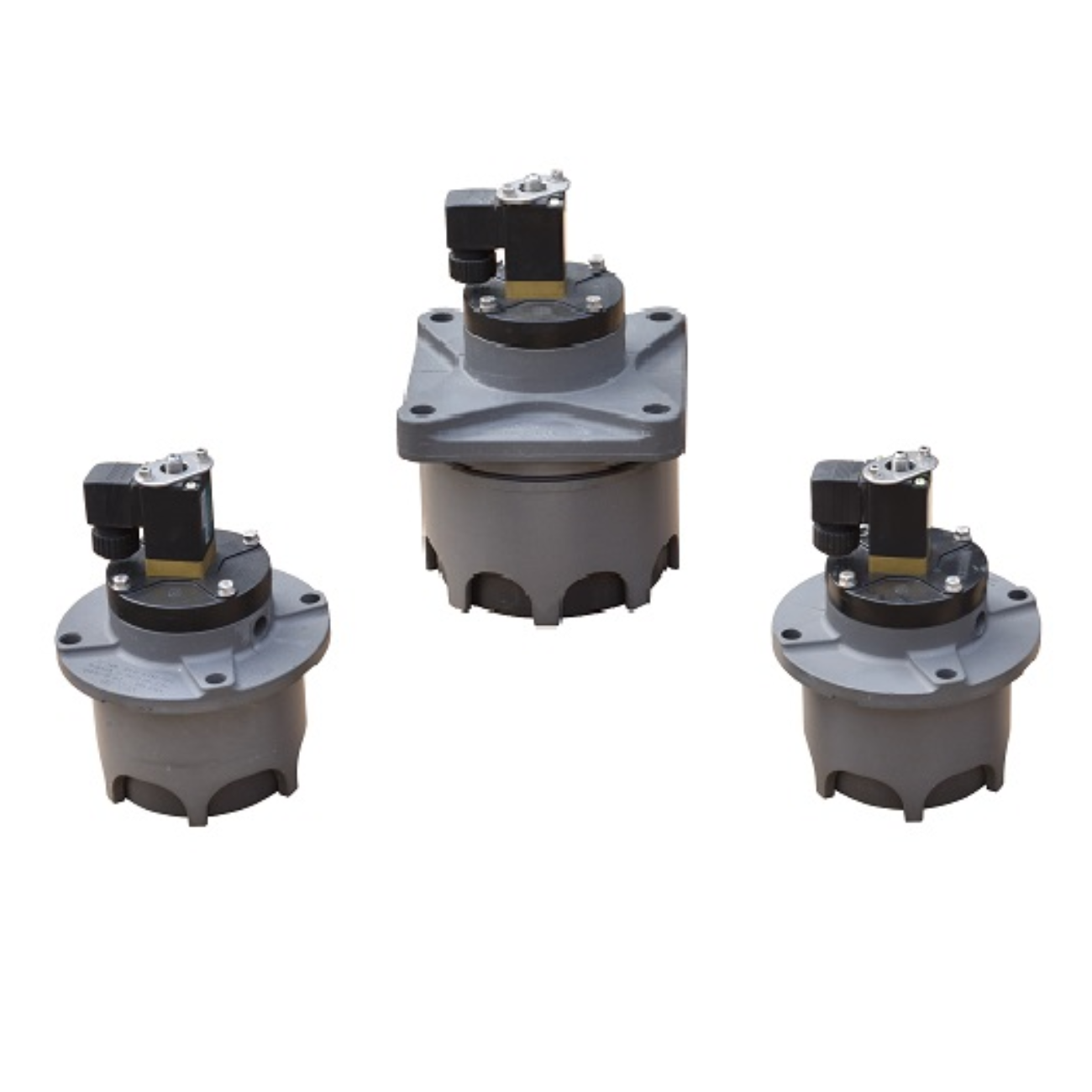
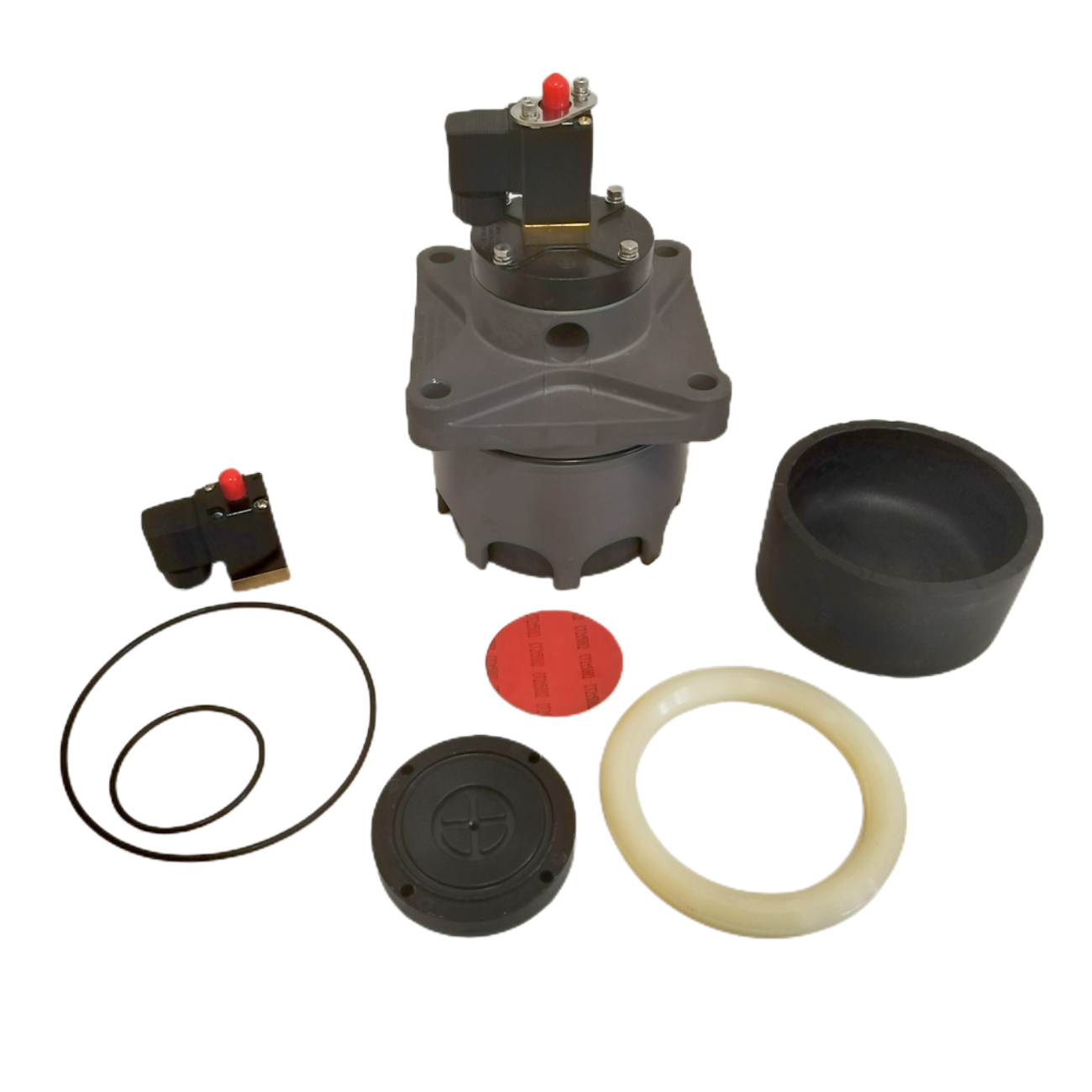
Piston-Type Pulse Solenoid Valve

Piston-Type Pulse Solenoid Valve uses a piston-driven structure similar to that of a submerged pulse valve and is generally mounted directly on the air manifold or air reservoir. Compared with conventional diaphragm-type designs, the piston structure uses a piston to actuate the main valve, making it suitable for industrial dust collection systems requiring frequent pulse cleaning, continuous operation, and reliable long-term performance.

Item Specification Component Material / Specification
Working Medium Clean Air (<55°C / 131°F) Valve Body High-Quality ADC12 Aluminum Alloy
Working Pressure 0.2–0.6 MPa (Test Pressure: 0.2–0.6 MPa) Piston H. Polymer Plastics
Operating Voltage & Current DC24V (1A) / AC110V (0.46A) / AC220V (0.23A) Diaphragm NBR / Fluorine Rubber
Temperature Rating -40°C to 125°C Pilot Assembly Solenoid Core 430FR Special Stainless Steel
Relative Humidity ≤85% Spring / Fasteners 304 Stainless Steel
Protection Rating IP65 Piston Service Life 1 Million Pulses or 3 Years

1、 Features & Functions

1. Compact Design for Space-Saving Installation

The piston-type design provides a more compact structure. When the required pulse-cleaning performance can be achieved, it may allow the use of a smaller air reservoir, helping reduce the overall installation space of the dust collection system. This makes it particularly suitable for systems where installation space is limited.

2. Fast Response and Concentrated Pulse Airflow

The valve responds quickly when opening, rapidly releasing compressed air from the air reservoir to generate a concentrated pulse of airflow. During closing, the pressure decays relatively gradually, which helps reduce pressure shock during filter cleaning and minimize unnecessary pulse-air loss.

3. Diaphragm-Free Design for Fewer Wear Components

The valve adopts a specially designed piston structure without the conventional diaphragm assembly and spring used in traditional diaphragm-type pulse valves. This reduces common failure points such as diaphragm fatigue and damage, helping improve valve operating reliability. Reducing wear-prone components compared with conventional diaphragm structures is also an important design direction of some piston-type pulse valves.

4. Large Piston Stroke for Strong Pulse Air Release

The piston provides a large opening stroke, creating a larger airflow passage when the valve opens. This allows compressed air from the air reservoir to be released rapidly. Under the same pulse-cleaning conditions, the design can help generate a stronger and more effective cleaning pulse.

5. Suitable for Frequent and Continuous Pulse Cleaning

The piston-operated structure reduces the reliance on repeated diaphragm deformation and is suitable for dust collection systems requiring frequent pulse cleaning and long-term continuous operation. It can be used in large baghouse and cartridge dust collectors where reliable and repeatable pulse-cleaning performance is required.


2、Typical Applications

Like conventional pulse solenoid valves, piston-type pulse valves can be used in various industrial dust collection systems. They are particularly suitable for applications emphasizing frequent actuation, continuous operation, and demanding operating conditions.

1. Large Baghouse Dust Collectors

Suitable for large baghouse dust collection systems in cement, steel, metallurgy, mineral processing, and other industries, where they provide periodic reverse-pulse cleaning for filter bags.

2. Large Cartridge Dust Collectors

Suitable for centralized cartridge dust collection systems used on industrial production lines, particularly systems requiring frequent pulse cleaning during continuous operation.

3. Cement & Building Materials

Suitable for dust collection equipment used in cement grinding, powder conveying, storage silos, packaging, and other production processes with continuous dust generation.

4. Mining & Mineral Processing

Suitable for industrial dust collection systems associated with crushing, screening, grinding, conveying, and other mineral processing operations.

5. Steel & Metallurgy

Suitable for dust and fume collection systems used in sintering, raw material handling, conveying, and other steel and metallurgical processes.

6. Powder Processing Systems

Suitable for pulse-jet filter cleaning systems used in chemical processing, powder processing, and applications involving powders and granular materials.

Specification

Diaphragm Dia. (mm) Piston Dia. (mm) Blowing Area (m²) Nominal Dia.
SYH-H-105 Φ72 Φ105 72

DN80

SYH-H-135 Φ72 Φ135 120

DN100

1、What Is the Working Principle of a Piston-Type Pulse Valve?

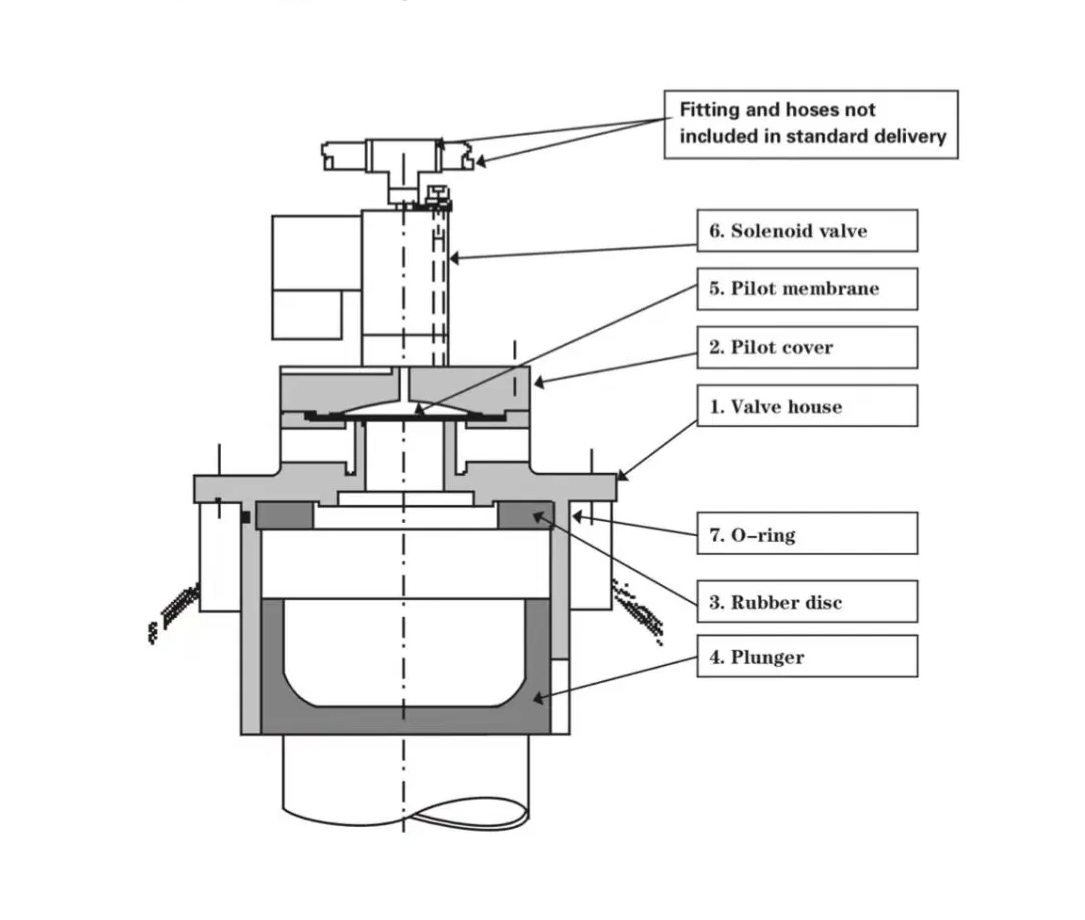
A Piston-Type Pulse Valve consists of a solenoid pilot head, piston assembly, valve body, and O-ring seals. It operates through pressure differences within the valve chambers together with the piston return mechanism. The standard version is designed for vertical installation.

1. Closed State — Standby
Compressed air enters the upper chamber of the piston through a small throttling gap in the valve body. The pressure in the upper chamber is higher than the pressure on the lower side of the piston, which is connected to the air reservoir.
The pressure difference pushes the piston against the valve seat, sealing the pulse-air passage. Meanwhile, compressed air remains stored in the air reservoir and the valve stays closed.

2. Pulse Opening
When the pulse controller sends an electrical signal, the solenoid pilot head is actuated and opens the pressure-relief passage of the upper chamber.
The air in the upper chamber is rapidly discharged, causing the chamber pressure to drop quickly. The resulting pressure difference across the piston allows the air-reservoir pressure to push the piston upward.
The piston opens the main passage, allowing a large volume of compressed air to be released rapidly through the pulse outlet, generating a powerful pulse-cleaning airflow.

3. Reset and Closing
When the pulse signal ends, the pilot relief passage closes. Compressed air enters the upper chamber again through the throttling gap, causing the chamber pressure to rise.
The piston then returns downward and reseats against the valve seat, cutting off the airflow and completing one pulse-cleaning cycle.

2、What Are the Advantages and Disadvantages of a Piston-Type Pulse Valve Compared with a Conventional Diaphragm Pulse Valve?

A piston-type pulse valve can provide higher pulse airflow, a stronger pulse impact, and controlled closing characteristics, making it suitable for demanding pulse-cleaning applications.
– Higher pulse airflow: The large-flow piston structure allows a large volume of compressed air to be released rapidly.
– Stronger pulse impact: The large opening passage helps generate a strong pulse-cleaning airflow.
– Controlled closing: The closing process provides a cushioning effect, helping reduce sudden impact on filter bags or cartridges and supporting longer filter media service life.
– High fatigue resistance: The piston structure avoids the repeated deformation of a conventional diaphragm, making it suitable for frequent and continuous pulse-cleaning operation.
– Higher air-quality requirements: Because the piston moves inside the valve body and relies on O-ring sealing, clean and dry compressed air is important to reduce the risk of contamination, sticking, and leakage.

3、Can the Piston-Type Pulse Valve Be Installed Horizontally?

The standard version must be installed vertically.
The standard piston structure relies on the specified return mechanism and vertical installation orientation to ensure reliable closing. For horizontal installation, a version with an internal return spring should be selected. Otherwise, the piston may not return reliably to the closed position, which can result in incomplete sealing or continuous air leakage.
This installation requirement is also specified for OPTIPOW-type piston/plunger pulse valves, where an additional internal spring is required for horizontal installation.

4、What's the best Applications for Piston-Type Pulse Valves

Piston-type pulse valves are designed around high pulse airflow, strong pulse impact, and controlled closing. They are particularly suitable for the following applications:

1. High-Dust-Load Cartridge Dust Collectors
Suitable for long filter cartridges, large-diameter cartridges, and applications with heavy dust accumulation, such as cement, mineral powder, aggregates, metallurgy, and powder processing.
These applications may require a larger volume of compressed air per pulse to effectively remove thick dust deposits from the filter media.

2. High-Frequency, Continuous Pulse-Cleaning Systems
Suitable for production lines operating continuously, including 24-hour industrial processes with frequent pulse-cleaning cycles.
Compared with conventional diaphragm valves, the piston structure reduces dependence on repeated diaphragm deformation and is suitable for frequent and continuous operation.

3. Large Baghouse Dust Collectors
Suitable for large baghouse systems with long filter bags that require a strong pulse-cleaning airflow.
The controlled closing characteristics of the piston valve can help reduce sudden mechanical impact on filter bags and support longer filter-media service life.

4. Dust Collection Systems with Circular Air Reservoirs
Piston-type pulse valves are particularly suitable for dust collection equipment using circular pressure tanks or air reservoirs. OPTIPOW-type designs, for example, are specifically designed for use with circular pressure tanks.

5. Combustible-Dust Applications
For dust collection systems handling potentially combustible dusts, such as grain dust, aluminum powder, or wood dust, an appropriately certified explosion-protected solenoid coil and valve configuration can be selected according to the actual hazardous-area classification and project requirements.

5、What's the working Pressure Range of the Piston-Type Solenoid Valve

Recommended Working Pressure:0.3–0.5 MPa (3–5 bar)
This range is recommended as a practical operating range for balancing pulse-cleaning performance and sealing durability, provided that it matches the actual valve design and application requirements.
Allowable Pressure Range
0.2–0.6 MPa
Static Pressure Resistance
The valve body can withstand a static pressure of up to 0.6 MPa.
However, continuous operation above 0.5 MPa is not recommended for this specific configuration, as higher pressure may increase the load on the O-ring sealing system and potentially increase the risk of piston friction, sticking, or leakage.

6、Why Is a Lower Working Pressure Recommended for a Piston-Type Pulse Valve?

1. Large-Flow Structure
The piston valve uses a large-flow passage and can release a large volume of compressed air rapidly. Therefore, it can achieve strong pulse-cleaning performance without relying on excessively high air pressure.

2. O-Ring Sliding Seal
The piston uses O-ring sealing during its movement. Higher pressure can increase the load on the sealing components and accelerate wear. Contaminants in the compressed air can further increase the risk of piston sticking or leakage.
Although the valve body may withstand pressures up to 0.6 MPa, continuous operation at excessively high pressure is not recommended for this configuration.

3. Reduced Impact on Filter Media
Operating at an appropriate lower pulse pressure can help reduce excessive mechanical impact on filter cartridges or filter bags, which may help protect the filter media during repeated cleaning cycles.

4. Reliable Piston Resetting
The standard valve relies on its designed piston return mechanism for closing. Excessively high pressure may affect the pressure balance and closing characteristics of the piston, potentially resulting in incomplete sealing.

5. Reduced Compressed-Air Consumption
Operating at an appropriate pressure can also help reduce unnecessary compressed-air consumption and therefore lower the energy cost associated with compressed-air generation.

1、Important Notes

1、Ensure that the compressed air is clean and dry to minimize the effects of moisture and impurities on the diaphragm, pilot assembly, and internal components of the valve.

2、Vertical installation is required for the standard version. The piston relies on gravity-assisted return to close the valve. For horizontal installation, a version with an internal return spring must be selected; otherwise, the piston may not close properly, resulting in continuous air leakage.

2、 Installation Requirements

1、Installation Orientation
The standard version must be installed vertically. The piston relies on gravity-assisted return to close the valve. For horizontal installation, a version with an internal return spring must be selected; otherwise, the valve may not seal properly and continuous air leakage may occur.
The required installation orientation depends on the internal valve design. Piston-operated valve mechanisms may require spring assistance when installed in orientations other than the specified standard position. DHV Industries

2、Keep the Air Circuit Clean
An air filter and water-oil separator should be installed upstream of the valve to ensure that the compressed air is dry, oil-free, and free from impurities. Clean compressed air helps protect the sealing components and extend their service life.

3、Daily Operation & Maintenance

1. If the valve shows insufficient pulse pressure, abnormal pulse operation, or continuous air leakage, promptly inspect the piston, pilot assembly, and related sealing components.

2. Depressurize Before Maintenance
Before disassembly, inspection, or replacement, always:
Disconnect the power supply → Shut off the compressed-air supply → Release residual pressure → Confirm that the system is fully depressurized before maintenance.
This is an essential safety requirement when servicing pneumatic valves and pressurized systems.

4、Complementary Products

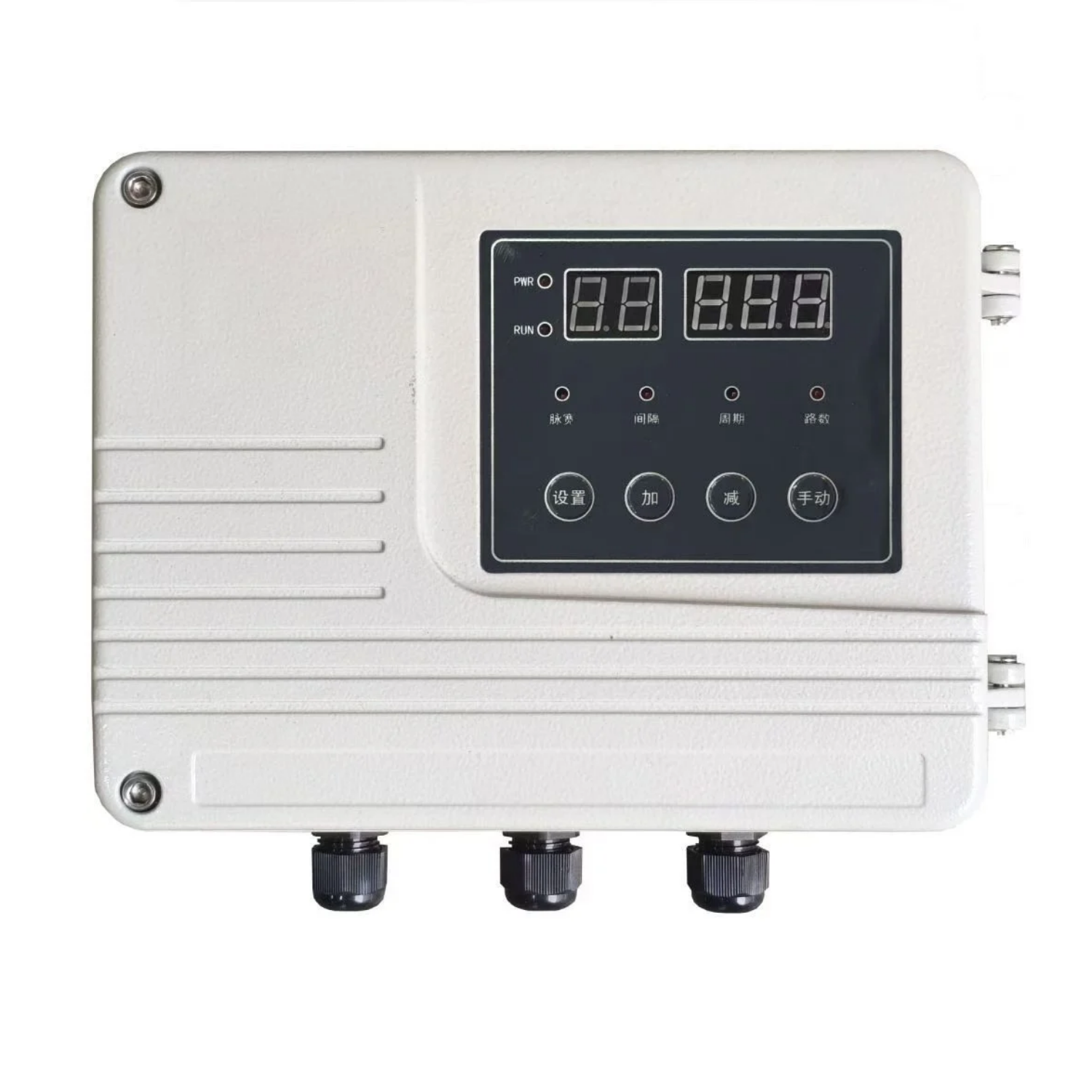
1、Pulse Controller — Controls the pulse-cleaning sequence, pulse duration, and interval.

2、Differential Pressure Controller — Controls on-demand filter cleaning based on the differential pressure across the filter media.

3、Air Filter / Regulator — Filters compressed air and regulates the supply pressure.

4、Air Reservoir / Air Tank — Stores and supplies compressed air for pulse cleaning.

5、Dust-Cleaning Nozzles — Helps distribute and direct the pulse airflow for effective cleaning of filter cartridges and filter bags.

6、Piston Repair Kit & Sealing Gaskets — Replacement parts for routine maintenance and service, helping reduce downtime and maintain reliable valve operation.

Related products

Our bulkhead fittings provide a secure and reliable connection between…
Compared to plastic-encased timing pulse controllers, metal timing pulse controllers…
Right-Angle Pulse Solenoid Valve features a 90° inlet and outlet…

Contact Us

Our friendly customer service team is here to help with quotations, technical consulting and custom manufacturing enquiries. 

Tel

+86 183 3655 6608

Email

info@symfilter.com

Address

38 Xihong Road, Xinwu District, Wuxi City, Jiangsu Province, China

Leave a Message

Our friendly customer service team is here to help with quotations, technical consulting and custom manufacturing enquiries. We reply within 24 hours.