You are here:
45
44
46
47
45
44
46
47

Dust Collector Smart Components

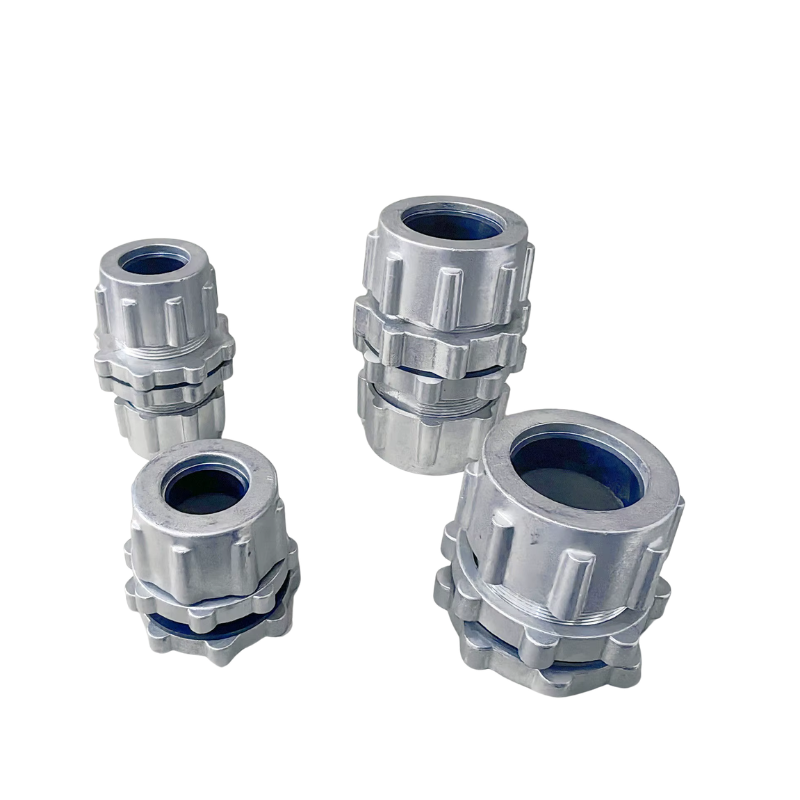
Bulkhead Connector for dust collector

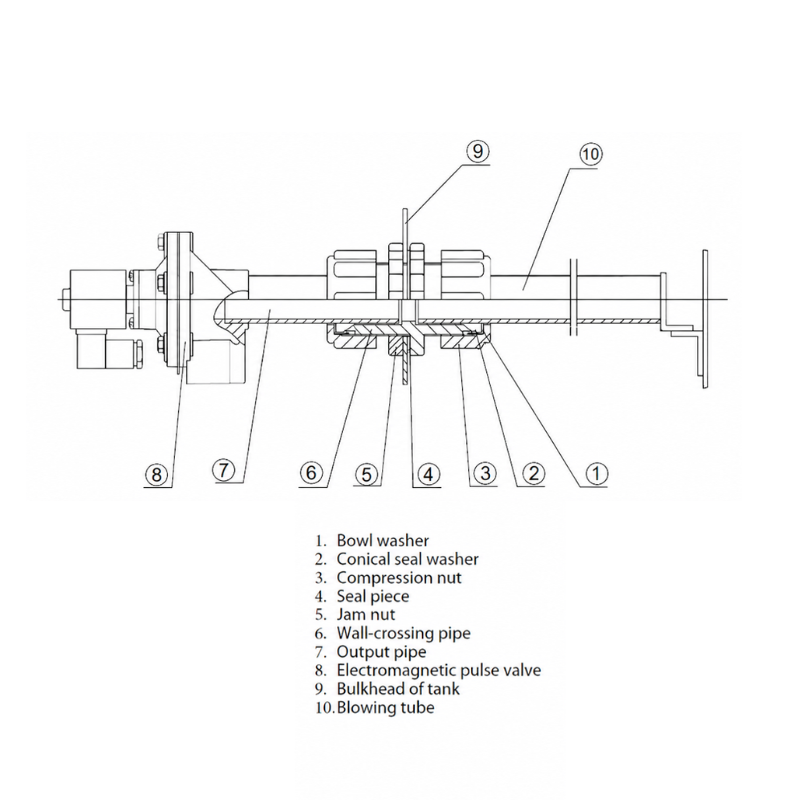
Our bulkhead fittings provide a secure and reliable connection between pulse valves and blowtubes through the dust collector wall. Designed for quick installation on unthreaded blowtubes, they eliminate the need for welding or extra fittings, helping reduce installation time, labor, and material costs.

Size 1 inch / 1.5 inch Type

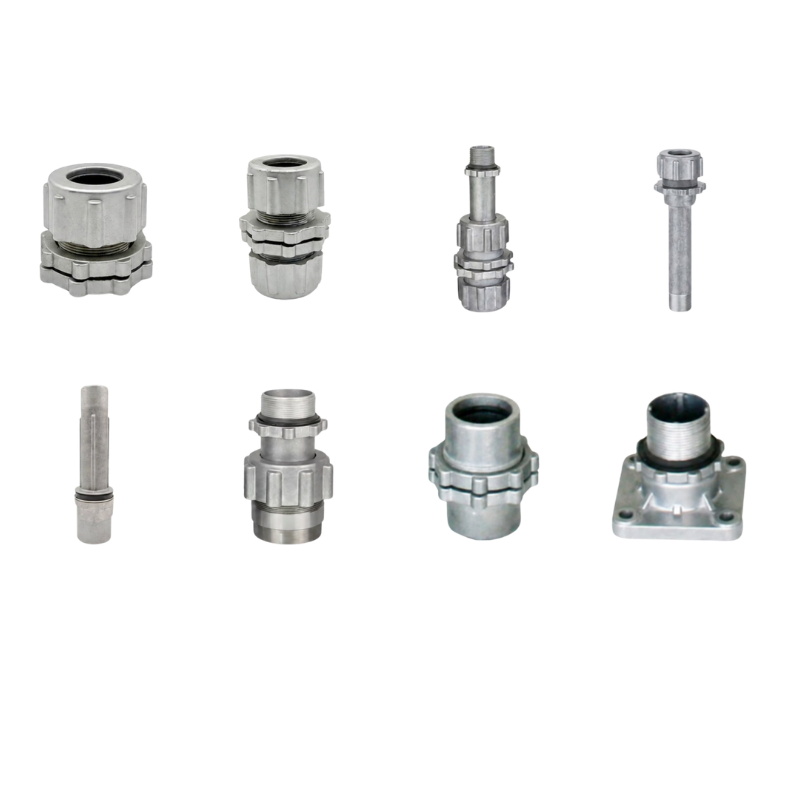
two-piece tube connection fittings and through tube connection fittings

Seal ring material NBR or FKM Body material

Aluminum alloy

1、 Features & Functions

Through-Wall Connection for Simplified Piping Layout

The bulkhead connector features a through-wall connection design that helps reduce unnecessary piping and provides a more organized connection between external and internal air lines.

Easy Installation and Maintenance

Designed with a threaded nut-and-tube connection and an internal rubber sealing ring, the connector provides a secure fit, simplifies installation, saves installation time, and helps prevent air leakage.

High-Quality Aluminum Construction

Made with a high-quality aluminum metal body, the connector offers durability and reliable performance in demanding industrial environments.

Designed for Pulse-Jet Cleaning Systems

The bulkhead connector serves as part of the compressed air piping system in pulse-jet dust collectors. It works with components such as air reservoirs, pulse solenoid valves, and blowtubes to support reliable air delivery for filter cleaning.

2、Typical Applications

Size

1 inch / 1.5 inch Type two-piece tube connection fittings and through tube connection fittings

Seal ring material

NBR or FKM Body material

Aluminum alloy

1、What Is the Core Value of a Bulkhead Connector for Dust Collectors?

A bulkhead connector is used to connect the pulse solenoid valve to the blowtube, allowing compressed air to pass through the dust collector wall into the cleaning pipework. Its core value lies in providing a reliable pipe connection while simplifying the installation of the cleaning system.

Quick-fit bulkhead connectors can connect smooth, unthreaded blowtubes without welding or additional fittings. This helps reduce installation labor and material costs while making subsequent disassembly and maintenance easier.

2、What Problems Can Air Leakage from a Bulkhead Connector Cause?

Air leakage at the bulkhead connector results in compressed air loss, reducing the efficiency of the compressed air system. Continuous leakage in a pulse-jet cleaning system may also affect supply pressure stability and increase the workload of the air compressor.

Severe leakage may affect pulse valve performance, resulting in insufficient cleaning of filter cartridges or filter bags. This can lead to increased filter resistance and affect the stable operation of the dust collector. Therefore, the sealing components, pipe compatibility, and connection tightness should be checked promptly.

3、What Types of Dust Collectors Are Bulkhead Connectors Suitable for?

Bulkhead connectors are primarily used in industrial dust collection equipment that employs compressed-air pulse-jet cleaning, including cartridge dust collectors, baghouse dust collectors, and some powder recovery systems.

They are typically installed through the dust collector wall to connect the pulse solenoid valve to the blowtube, allowing compressed air to enter the cleaning pipework. Suitability depends on the connector design, connection dimensions, and equipment installation requirements.

4、Does Installing a Bulkhead Connector Require Welding?

Generally, no. Quick-fit bulkhead connectors can be installed directly on smooth, unthreaded blowtubes, using a compression nut and sealing structure to secure the pipe.

This connection method reduces the need for welding and additional fittings, shortens installation time, and simplifies subsequent disassembly and maintenance. During installation, ensure that the blowtube’s outer diameter matches the connector specifications and tighten the connection according to the manufacturer’s instructions.

5、What Is the Difference Between Single-Connection and Double-Connection Bulkhead Connectors?

What Is the Difference Between Single-Connection and Double-Connection Bulkhead Connectors?

The main difference between single-connection and double-connection bulkhead connectors lies in their pipe connection configurations and installation layouts.

Single-Connection Bulkhead Connector: Designed for specific single-sided connection configurations. The exact connection arrangement depends on the product design.

Double-Connection Bulkhead Connector: Can accommodate pipe connections on both sides of the wall, depending on the system layout.

Selection should be based on the blowtube arrangement, wall structure, connection dimensions, and product drawings. Since terminology may vary between manufacturers, always check the technical drawings of the specific model before purchasing.

6、How Do You Fix Air Leakage from a Bulkhead Connector?

If air leakage occurs at a bulkhead connector, follow these inspection steps:

Check the compression nut: Confirm whether the connection is loose and retighten it according to the manufacturer’s instructions.

Inspect the seals: Check for wear, aging, deformation, or incorrect installation. Replace the seals if necessary.

Verify pipe dimensions: Ensure that the blowtube’s outer diameter matches the connector specifications to prevent poor sealing caused by dimensional mismatch.

Inspect the pipe condition: Check whether the blowtube is misaligned, deformed, or damaged on the surface. Ensure that it is properly inserted and correctly fitted into the connector.

Reinstall and test: After resolving the issue, reinstall the connector and perform a leak test under safe conditions.

1、Important Notes

1、For high-temperature applications, stainless steel bellows or high-temperature-resistant silicone should be selected. For oily dust or corrosive fumes, FKM (fluoroelastomer) seals are recommended.

2、Before maintenance, shut off the compressed air supply and ensure that the system is fully depressurized. Never disassemble or adjust the bulkhead connector while the system is pressurized.

2、Installation Requirements

Select the appropriate bulkhead connector size. Common options include 1-inch and 1.5-inch sizes. Two connection types are available: two-piece tube connection fittings and through-tube connection fittings.

Connect the header tank and filter blowtubes to the valve using smooth, unthreaded pipes. Secure the quick-fit connections by tightening the nut rings with a suitably sized CH wrench and the bolts with a PH wrench.

3、Daily Maintenance

The bulkhead connector is a durable component that requires minimal maintenance. Periodically check the tightness of the connections and inspect for air leaks.

4、Related Control and System Components

To establish a complete compressed-air connection system for dust collector cleaning, the bulkhead connector can be used with the following components, depending on the equipment design:

1、Pulse solenoid valves
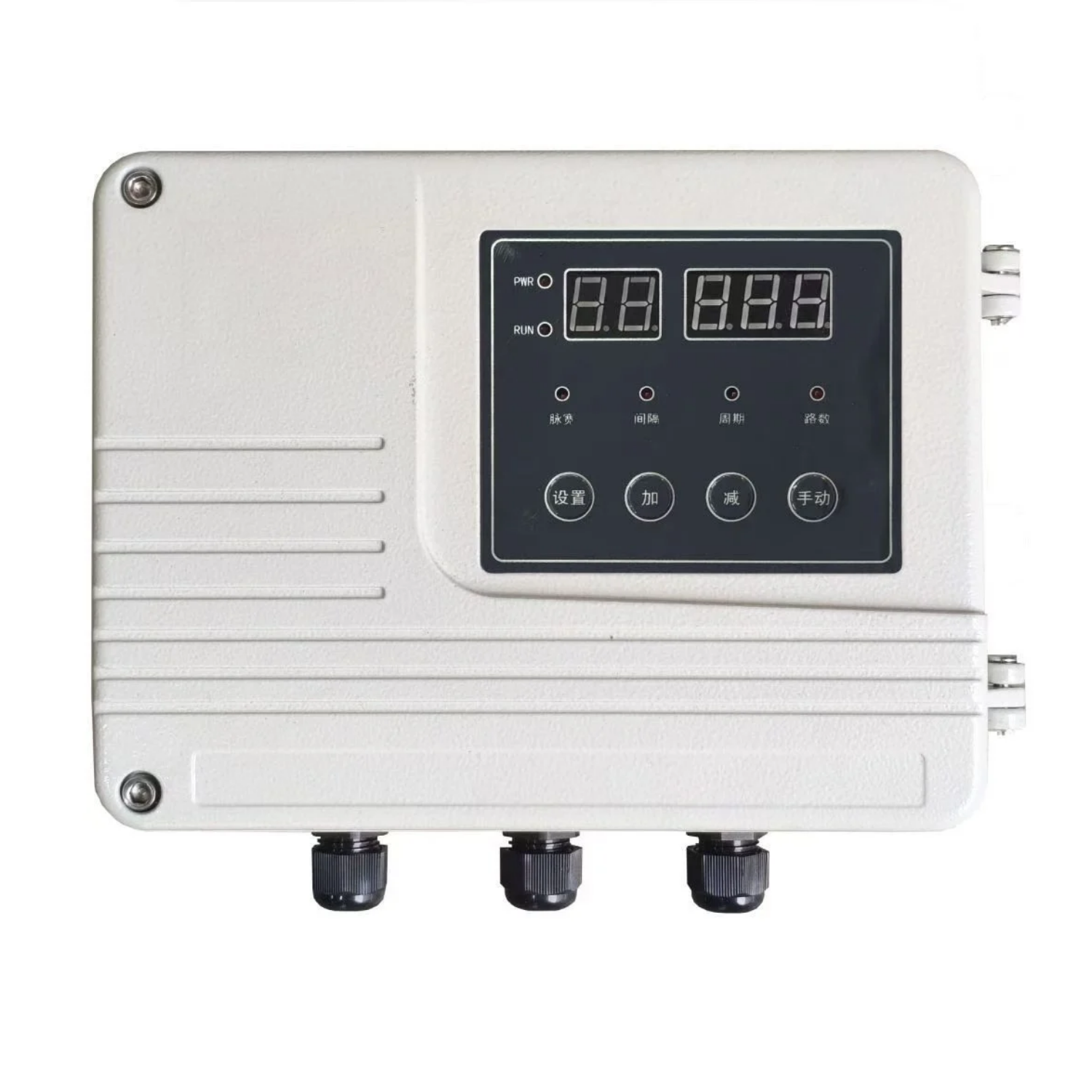
2、Pulse controllers
3、Cleaning blowtubes

Related products

Our bulkhead fittings provide a secure and reliable connection between…
Compared to plastic-encased timing pulse controllers, metal timing pulse controllers…
Right-Angle Pulse Solenoid Valve features a 90° inlet and outlet…

Contact Us

Our friendly customer service team is here to help with quotations, technical consulting and custom manufacturing enquiries. 

Tel

+86 183 3655 6608

Email

info@symfilter.com

Address

38 Xihong Road, Xinwu District, Wuxi City, Jiangsu Province, China

Leave a Message

Our friendly customer service team is here to help with quotations, technical consulting and custom manufacturing enquiries. We reply within 24 hours.