
You are here:
30
31
32
30
31
32

Solenoid Pulse Valve

Pneumatic Pilot-Operated Pulse Solenoid Valve

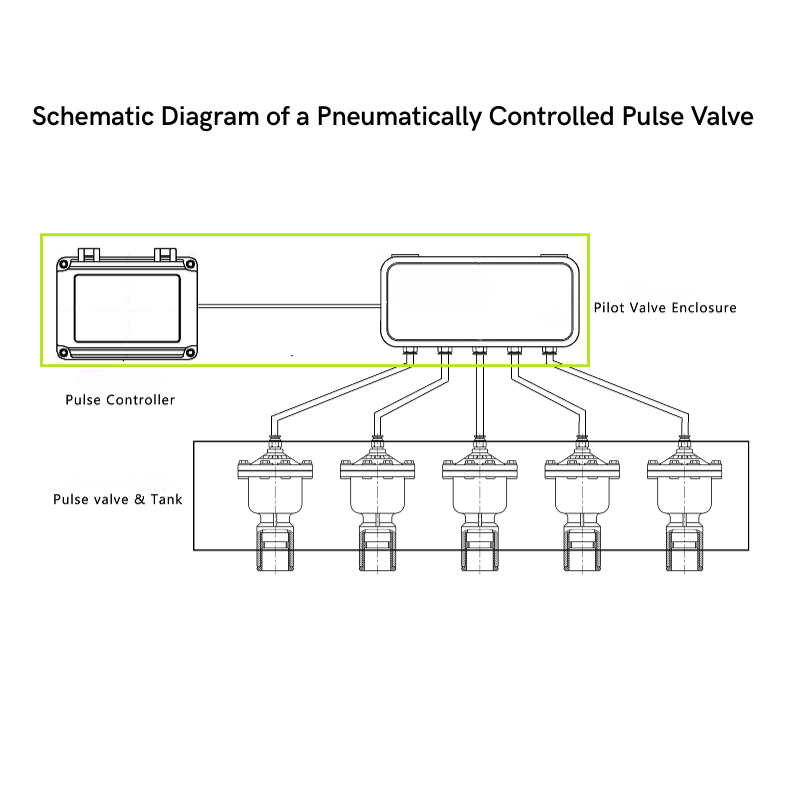
Pneumatically controlled pulse valves are key components in the cleaning system of pulse-jet baghouse dust collectors. Under the control of a remote pulse signal, compressed air actuates the diaphragm inside the valve, causing it to open and close. The diameter of the diaphragm determines the stroke length and the speed of opening and closing; the larger the diameter, the greater the stroke, and the better the cleaning performance.

Working medium

Clean air (<55°C / 131°F) Body High-grade ADC12 aluminum alloy

Working pressure

0.1 ~ 0.7 MPa (test pressure 0.1 ~ 0.8 MPa) Diaphragm

NBR / Fluorine rubber

Working power & current

DC24V (1A) / AC110V (0.46A) / AC220V (0.23A) Pilot armature 430FR special stainless steel
Temperature — Normal (Class 1) -25°C ~ 100°C (-13°F ~ 212°F) Spring

304 stainless steel

Temperature — High (Class 2)

-25°C ~ 230°C (-13°F ~ 446°F) Fasteners 304 stainless steel
Temperature — Low (Class 3) -40°C ~ 85°C (-40°F ~ 185°F) Protection level

IP65

Air humidity ≤ 85% Diaphragm life

One million pulses or 5 years

1、 Features & Functions

1.Extend Service Life
External pneumatic pilot control keeps electrical components away from high temperatures, heavy dust, and strong vibration, helping improve system reliability and service life.

2. Centralized Electrical Control

Multiple pulse valves can be controlled through centralized pilot valves, keeping electrical components together in an accessible location and reducing distributed field wiring.

3. Suitable for Challenging Operating Conditions

Pneumatic control allows sensitive electrical components to be positioned away from demanding process areas, making it a flexible solution for high-temperature, dusty, or otherwise challenging environments.

4. Simplified Wiring

For large dust collectors with many pulse valves, centralized pilot control can reduce field cabling and simplify equipment installation and system integration.

5.Centralized Maintenance and Easier Service

Centralizing the control components in an accessible location makes inspection, maintenance, and replacement easier while reducing the need to work in elevated, hot, or dusty areas.

2、Typical Applications

  • High-Temperature Dust Collection
    Cement kilns, steel sintering, metallurgy, and lime production.
  • Heavy-Dust Industrial Environments
    Mining, mineral processing, coal handling, and powder processing.
  • Elevated & Hard-to-Access Dust Collectors
    Large baghouses, high-mounted dust collectors, and silo-top filtration systems.
  • Large Multi-Valve Dust Collection Systems
    Large baghouses, multi-compartment collectors, and centralized industrial filtration systems.
  • Hazardous or Special Environments
    Coal dust, grain processing, chemical powders, and other applications with specific electrical installation requirements.

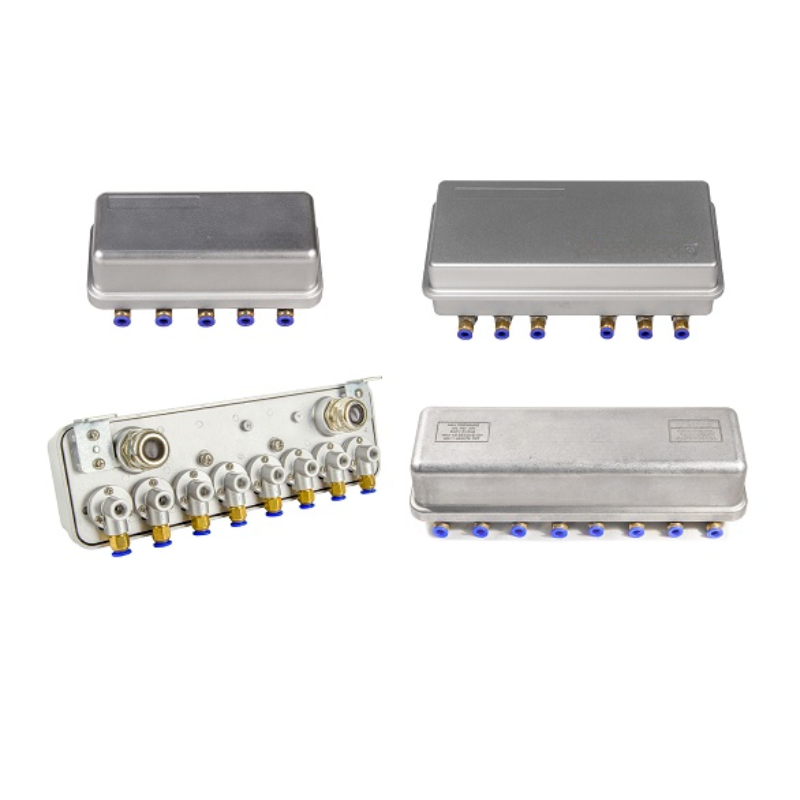
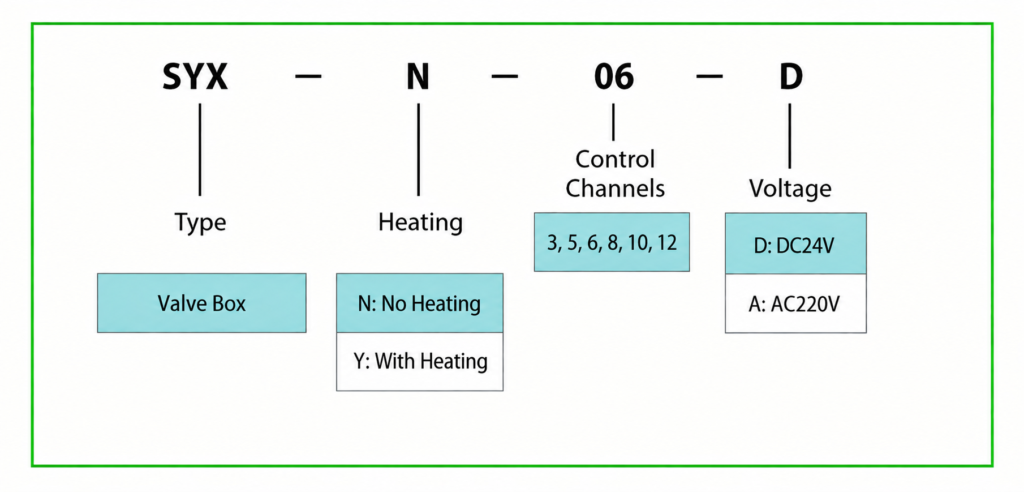
Model

Control Ways Optional Heating Quick-Connect Pipe Diameter Enclosure Dimensions
SYX-N/Y-03-D/A 3 Y/N 6/8/10 mm

208 × 96 × 96 mm

SYX-N/Y-05-D/A

5 Y/N 6/8/10 mm 208 × 96 × 96 mm
SYX-N/Y-06-D/A 6 Y/N 6/8/10 mm

318 × 100 × 110 mm

SYX-N/Y-08-D/A

8 Y/N 6/8/10 mm 318 × 100 × 110 mm
SYX-N/Y-10-D/A 10 Y/N 6/8/10 mm

302 × 150 × 100 mm

SYX-N/Y-12-D/A

12 Y/N 6/8/10 mm

302 × 150 × 100 mm

1、How does an air pilot pulse valve work?

The air pilot pulse valve is controlled by an external pneumatic pilot signal to actuate the pilot mechanism. When the control signal arrives, the pilot air circuit releases the pressure in the diaphragm control chamber, creating a pressure difference across the diaphragm. The main valve opens rapidly, and compressed air from the air reservoir flows through the valve body into the blowpipe to form a pulsed air jet. Once the control signal terminates, pressure rebuilds inside the diaphragm control chamber, and the valve closes.

2、What is the difference between an air pilot pulse valve and a pulse solenoid valve?

1. Driving method: The air pilot valve is triggered by an air pressure signal; a standard solenoid valve is driven by an electric signal plus a solenoid coil.
2. Explosion-proof advantage: The air pilot valve has no electric coil and carries no electricity on the valve body, making it suitable for dust explosion-prone and flammable environments.
3. Response & flow: Air pilot valves are ideal for large-bore valve bodies with higher jet flow. Solenoid valves feature simple installation and are widely used in standard dust collectors.
4. Wiring & piping: Air pilot valves require pilot air tubing layout; solenoid valves need electrical wiring.

3、What working conditions are suitable for air pilot pulse valves?

They are applied in explosion-proof dust collection scenarios (coal dust, aluminum powder, combustible dust dust collectors), large baghouse dust collectors, high-temperature working conditions, and dust removal systems where extensive electrical wiring is inconvenient. Widely used in mining, coal chemical industry, aluminum processing, grain dust processing equipment.

4、Can an air pilot pulse valve replace a conventional pulse solenoid valve?

It cannot be directly replaced. The air pilot valve requires supporting pilot air piping plus an air-operated pulse controller. The original electric control circuit cannot drive it directly, and the control system needs modification. Confirm the control method before selection.

5、What determines the service life of an air pilot pulse valve?

The core component is the rubber diaphragm. Its service life is directly determined by diaphragm material (NBR nitrile rubber / FKM fluororubber recommended), air source cleanliness (oil and moisture accelerate aging), working pressure fluctuation and jet frequency. The aluminum alloy valve body determines the durability of the main body.

6、What connection sizes are available for air pilot pulse valves?

Common right-angle air pilot pulse valve sizes: 1″, 1.5″, 2″, 2.5″, 3″. Straight-through and submerged air pilot types are also available. The thread is generally internal G thread. Flange connections can be customized upon customer request.

1、Important Notes

Ensure the compressed air is clean and dry to reduce the impact of moisture and impurities on diaphragms, pilot assemblies and valve internals.

2、 Installation Requirements

1、Proper Pneumatic Circuit Installation
Pilot air circuit installation: A separate thin pilot air tube must be arranged for the air pilot valve. Avoid excessively long or thin pipelines to prevent delayed response and weak jetting. It is recommended to use pressure-resistant nylon tubing with an outer diameter of 8 mm, and the tube length shall be ≤1.5 m.

2、Keep Pneumatic Circuit Clean
An air filter and oil-water separator must be installed at the front end to guarantee dry, oil-free and impurity-free compressed air and prolong diaphragm service life.

3、Fixation Requirements
Mount the valve body firmly to prevent loose connectors, abnormal noise and air leakage caused by equipment vibration.

4、Pilot Valve Box Installation
Install the box above the air tank and keep it horizontal so that the pilot valve stays in vertical position.

3、Daily Operation & Maintenance

In case of insufficient jet pressure, abnormal pulse action or continuous air leakage, inspect the diaphragm, pilot assembly and relevant seals in a timely manner.

After long-term operation, regularly inspect internal wearing parts according to actual working conditions, and replace repair kits when necessary.

4、Complementary Products

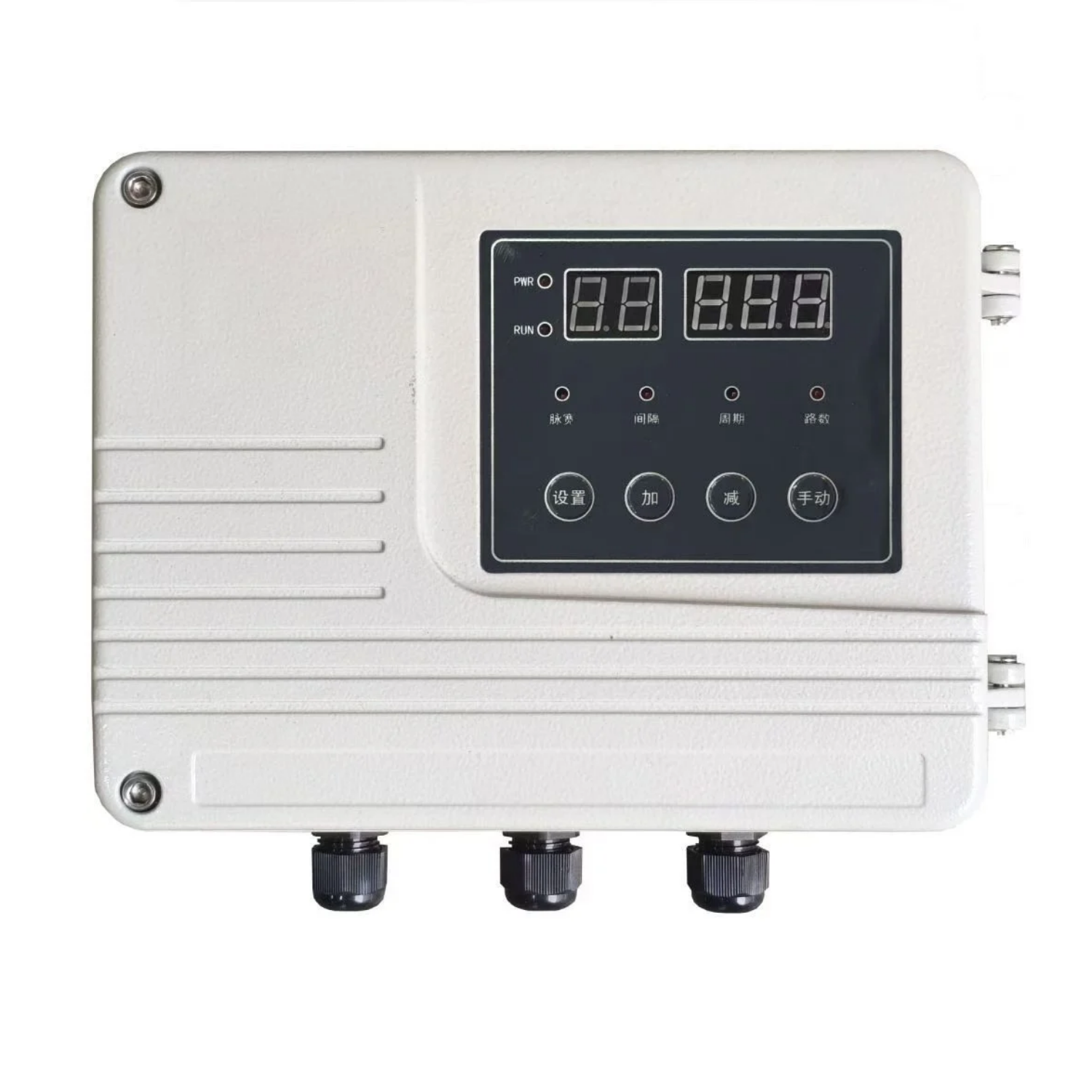
1、Air pilot pulse controller: Specially matched for air pilot valves to output pneumatic control signals
2、Thin pilot air tube: Complete pipeline accessories to ensure smooth air flow; pressure-resistant nylon tubing with 8 mm outer diameter is recommended
3、Air Filter / Regulator — Filters compressed air and regulates supply pressure
4、Air Reservoir / Air Tank — Stores and supplies compressed air required for pulse dust cleaning
5、Dust-Cleaning Nozzles — Improves jet cleaning performance for filter cartridges and filter bags
6、Diaphragm repair kits & gaskets: Wearing spare parts for daily maintenance and replacement to reduce equipment failure rate

Related products

Our bulkhead fittings provide a secure and reliable connection between…
Compared to plastic-encased timing pulse controllers, metal timing pulse controllers…
Right-Angle Pulse Solenoid Valve features a 90° inlet and outlet…

Contact Us

Our friendly customer service team is here to help with quotations, technical consulting and custom manufacturing enquiries. 

Tel

+86 183 3655 6608

Email

info@symfilter.com

Address

38 Xihong Road, Xinwu District, Wuxi City, Jiangsu Province, China

Leave a Message

Our friendly customer service team is here to help with quotations, technical consulting and custom manufacturing enquiries. We reply within 24 hours.